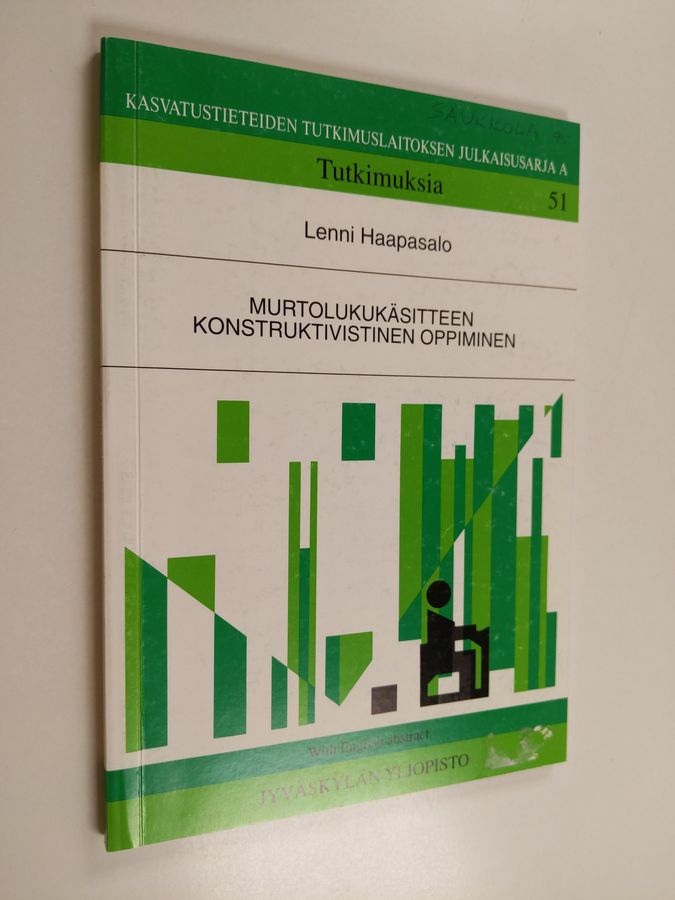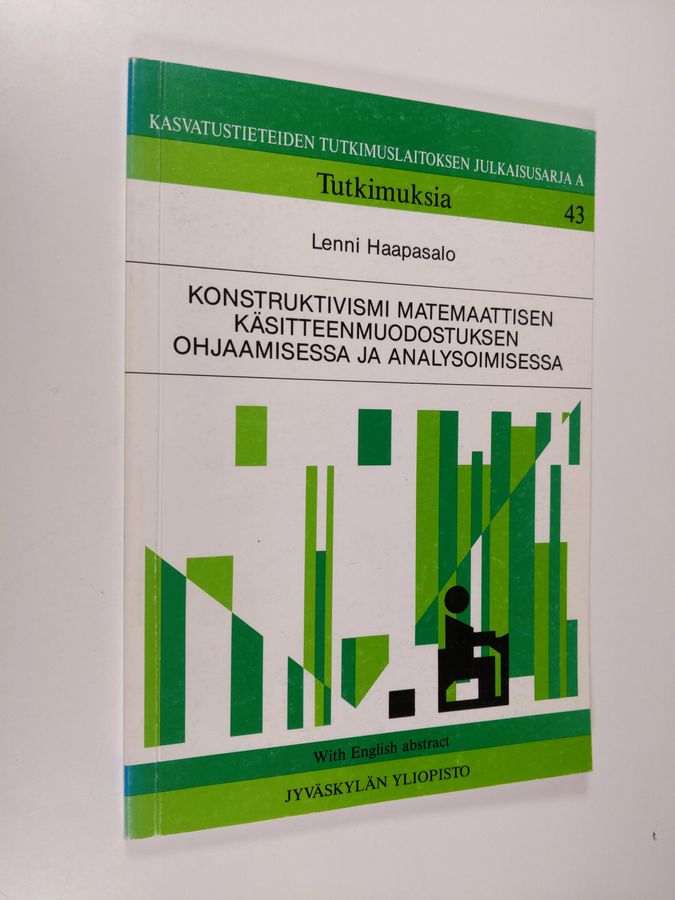
Konstruktivismi matemaattisen käsitteenmuodostuksen ohjaamisessa ja analysoimisessa =
Constructivism in the guidance and analysis of mathematical concept building
- Kieli
- Suomi
- Julkaisuvuosi
- 1991
- Muoto
- Nidottu (pehmeäkantinen)

Constructivism in the guidance and analysis of mathematical concept building
Abstract. In this report the structure and the results of the MODEM project (Model Construction for Didactic and Empirical Problems of Mathematical Education) will be introduced. In the study the concept of the slope of a straight line was investigated. It was done with the eighth grade pupils by means of a computer learning program planned for this concept learning. The investigation gave good possibilities for analysis of the pupils' thinking processes and working habits in this new kind of learning environment. It showed clearly that the process of mathematical concept building is often a long process in which the phases of orientation, definition, identification, production and reinforcement are systematically involved. These phases also form a good framework for evaluation. This investigation showed that the identification phase plays a central role in concept building. It seems to create the best and most pleasant learning environment for the forming of concept attributes. Leaving out this important phase caused a lot of difficulties in concept building. Still, concept understanding is better measured by the production tasks, which were difficult for the pupils. In the cognitive test the pupils' results were best in the application tasks and very poor in the identification as well as in the production tasks. The mode of information representation (verbal, graphic, symbolic) was found to have a different effect on the thinking processes of the pupils. Still, a production within the same representation form is significantly more difficult than a production across different kind of representations. The name of a concept was found important in forming the attributes. The girls had clearly less experience with computers but also more fears of computer based learning than the boys. These fears were found to be fears of the program more than fears of the computer as a technical instrument. The girls found learning more fun, interesting and exciting than the boys. Pupils' marks in mathematics or their routines with the computer did not have any correlation with their opinions about the learning environment or about the computer based learning. The empirical observation of classes showed that in the school most activity is concerned with the surface properties of the concept, and with very stereotyped behaviors. Analysis of the pupils' thinking processes revealed that the pupils have incredibly wrong mental models even of the basic concepts in school mathematics. Especially when the computer is involved it seems to be possible to organize new kinds of learning environments and to develop pupils' working habits. Still, in this investigation no conclusive evidence was found that learning with computer would have any positive or negative effect on the cognitive results nor on opinions about this kind of learning environment. Tässä raportissa esitetään ns. MODEM-projektin viitekehys sekä sen ensimmäisen empiirisen vaiheen tulokset. Tutkimuksessa selvitettiin kulmakertoimen käsitteen oppimista ja se tehtiin kahdeksannen luokan oppilaille opetusohjelman avulla. Erityisesti kiinnitettiin huomiota käsitteenmuodostusprosessin eri vaiheiden ja tiedon eri esitysmuotojen (verbaalisen, kuvallisen ja symbolisen) merkitykseen, oppilaiden ajatteluprosesseihin sekä heidän työskentelyynsä uudentyyppisessä oppimisympäristössä. Tutkimus antoi vahvistuksen sille, että käsitteenmuodostus on useimmiten pitkällinen prosessi, jossa orientoitumis-, määrittelemis-, tunnistamis-, tuottamis- sekä lujittamisvaiheiden erottaminen on didaktisesti tarkoituksenmukaista. Nämä tasot toimivat myös hyvänä viitekehyksenä mitattaessa käsitteen hallitsemista. Tutkimuksen perusteella kouluopetuksesta tyystin puuttuva tunnistamisvaihe on käsitteenmuodostuksessa keskeinen; se näyttää saavan aikaan käsitteen määreiden eli attribuuttien syntymiselle otollisimman ja oppilaille miellyttävimmän oppimisympäristön. Sen poisjättäminen vaikeutti ratkaisevasti käsitteenmuodostusta. Käsitteen hallitsemista mittaavat kuitenkin luotettavimmin tuottamistehtävät, mutta oppilaat kokivat ne vaikeina. He suoriutuivat parhaiten sovellustehtävistä, halliten yhtä huonosti tunnistamis- ja tuottamistehtäviä. Ajattelumallien todettiin olevan varsin erilaisia oppilaasta tai tilanteesta riippuen. Kuitenkin saman esitysmuodon sisällä tapahtuva tuottaminen on eri esitysmuotojen välistä tuottamista vaikeampaa. Käsitteen nimityksellä todettiin olevan merkitystä ajattelumallien syntymiselle. Tytöillä oli huomattavasti vähemmän tietokoneen käyttötottumuksia ja enemmän pelkoja tietokoneavusteista opetusta kohtaan kuin pojilla. Ne osoittautuivat kuitenkin peloiksi enemmänkin ohjelman käytön vaikeutta kuin itse konetta kohtaan. Tytöt pitivät opetusta tavallista hauskempana, kiinnostavampana ja innostavampana enemmän kuin pojat. Tietokoneen käyttötottumuksilla eikä oppilaan arvosanalla ei havaittu olevan yhteyttä oppilaiden mielipiteisiin oppimistapahtumasta ja tietokoneavusteisesta opetuksesta. Tavanomaisen kouluopetuksen observointi paljasti, että siinä keskitytään lähinnä käsitteiden "pintaominaisuuksiin" opetuksen ollessa melko stereotyyppistä. Oppilailla oli uskomattoman vääriä ajattelumalleja koulumatematiikan keskeisistä peruskäsitteistä, etenkin suhteen käsitteestä ja riippuvuudesta yleensä. Yhdeksäsluokkalaiset ja lukiolaiset hallitsivatkin puutteellisesti kulmakertoimen keskeisimmät tunnusmerkit. Tietokoneella näyttäisi olevan mahdollista toteuttaa uudentyyppisiä oppimisympäristöjä ja kehittää oppilaiden työskentelyvalmiuksia. Sillä ei kuitenkaan todettu olevan vaikutusta oppilaiden suorituksiin eikä heidän suhtautumiseensa oppimistapahtumaan.
Vaihtoehtoinen nimi: Constructivism in the guidance and analysis of mathematical concept building
2 aktiivista tarjousta